
Designing the right compressor room isn’t just about where the equipment fits, it’s about building a clean, efficient, and worry-free compressed air system that performs for decades. A well-planned room reduces energy costs, prevents overheating, simplifies maintenance, and protects the investments you’ve made in your equipment.
Air Components specializes in building high-performance compressed air systems backed by detailed 3D CAD layouts that show your entire room before construction even begins. Whether you’re upgrading an existing compressor room or designing a new facility, this guide walks through the key elements of designing a compressor room that’s built to last.
Why Your Compressor Room Design Matters
Many compressed air problems have nothing to do with the compressor, they come from the room around it. Hot, cramped, or poorly ventilated rooms force your equipment to work harder than it should, leading to:
- – Higher energy bills
- – More frequent shutdowns
- – Difficult servicing
- – Moisture issues
- – Shortened equipment life
A well-designed compressor room ensures:
- – Consistent temperature control
- – Strong and reliable airflow
- – Easy maintenance access
- – Lower energy usage and greater uptime
- – Room to grow as your facility expands
- – A clean, safe, and organized work environment
This next part is what our customers love:
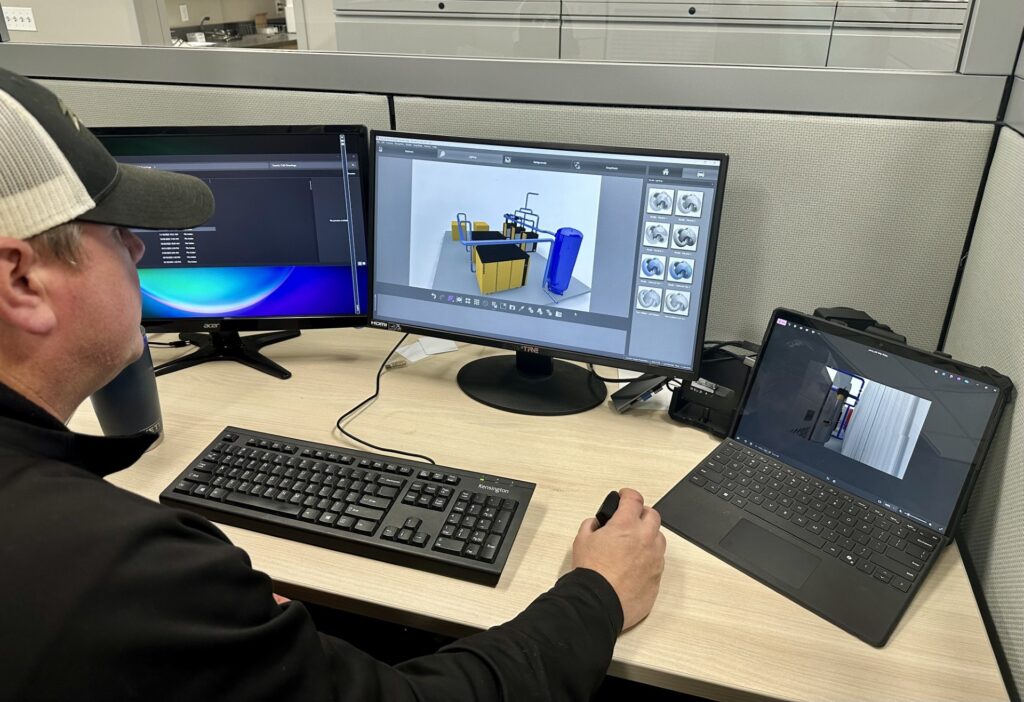
We can provide 3D CAD compressor room layouts that give you full visibility into equipment placement, clearances, piping, ventilation, and future expansion, long before any installation begins.
Key Components of an Ideal Compressor Room
Below are the most important factors in building a safe, efficient, and future-ready compressor room.
1. Smart Layout and Equipment Clearances
Proper spacing is critical. Compressors, dryers, and receivers need breathing room to operate safely and efficiently. Tight, crowded rooms lead to heat buildup and difficult service access.
Best practices include:
- – Maintain 3–4 feet of clearance on all sides of compressors, dryers, and receivers
- – Position equipment so that hot airflow doesn’t blow toward other machines
- – Use adequate ceiling height for proper airflow
- – Leave space for a future backup or trim compressor
- – Install equipment on a stable, level surface or concrete slab
Our 3D CAD layouts make these spacing requirements clear and help you avoid costly redesigns later.
2. Ventilation, Cooling & Temperature Control
Heat is one of the biggest enemies of compressed air systems. When temperatures rise, compressors lose efficiency and are more likely to shut down.
Follow these guidelines:
- – Maintain room temperature around 60°F during winter, and keep summer temperatures as close to outside ambient as possible for optimal cooling efficiency
- – Use cross-flow ventilation with cool air in low and hot air out high
- – Never recirculate warm discharge air back into the intake
- – Use outside air for intake when possible
- – Add louvers, ducting, or exhaust fans to remove heat
Proper ventilation not only protects your compressor, it reduces operating costs year-round. Our 3D CAD layouts allow us to visualize airflow paths, ventilation placement, and heat removal strategies in advance, helping ensure proper cooling and temperature control before installation begins.
3. Piping Design, Drainage, & Condensate Management
Your piping is the highway of your compressed air. Smart design keeps pressure high and operating costs low.
Important considerations:
- – Include floor drains or condensate management systems
- – Use properly sized main headers to reduce pressure loss
- – Avoid long, unnecessary piping runs
- – Always take drops from the top of the main header or loop to prevent moisture from entering your airlines
- – Keep drains accessible for maintenance
We integrate all air, condensate management into your CAD layout so you can see the full system before installation.
SmartPipe Advantage
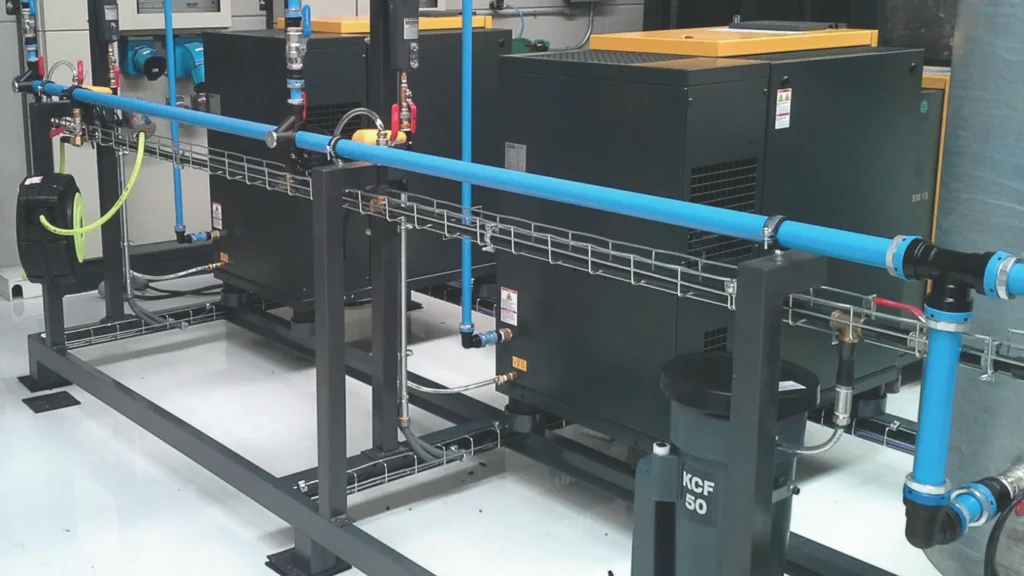
Air Components proudly supplies Kaeser SmartPipe, which is a lightweight modular, corrosion-free piping system available in aluminum up to 8” and stainless steel up to 10”. SmartPipe lowers installation labor, reduces pressure drop, and keeps your air system clean. Click the link here to learn more.
Experience the Difference of 3D CAD Visualization
Everyone in our industry sells compressors. Some companies can design compressor rooms. Very few companies take it to the next level with 3D CAD layouts.
Our detailed 3D CAD layouts allow you to:
- – See your entire compressor room before construction from all angles
- – Verify spacing, ventilation, and airflow paths
- – Review piping, electrical, and drainage routes
- – Identify future expansion plans
- – Avoid expensive mistakes, rework, and downtime
This level of visualization makes installation smoother, faster, and far more predictable.
Ready to Build Your Ideal Compressor Room?
Whether you’re adding a new Kaeser compressor or redesigning your entire air system, Air Components is here from the first sketch to final bolt.
Contact Air Components today to schedule a site visit and request your custom 3D CAD compressor room layout.
Let’s build a system you can rely on today, and for years to come.